August 19, 2014
All the world's glaciers in one global inventory
Earth is home to about 198,000 glaciers, which have now all been mapped. The first global inventory of alpine glaciers, including their …
The EARTH archive
Explore the archive by subject.
61 articles · Page 2 of 3
August 19, 2014
Earth is home to about 198,000 glaciers, which have now all been mapped. The first global inventory of alpine glaciers, including their …
August 19, 2014
In recent years lidar has become the gold standard for people looking to make high-resolution aerial maps — from archaeologists studying ruins …
August 19, 2014
What’s red, sparkly and far from home? Not Dorothy’s shoes, but a Thorne-Zytkow object (TZO), a type of hybrid star theorized since 1975 to exist …
August 19, 2014
Predicting how a changing climate and rising sea levels might impact humans in the future requires an understanding of how Earth has changed in …
August 19, 2014
Sharks are thought to have one of the most consistent body plans in the animal kingdom; the formidable predators seem to have remained roughly …
August 19, 2014
For decades, Istanbul has been bracing for a major earthquake from the dangerously active North Anatolian Fault, which passes just 20 kilometers …
August 19, 2014
Nereus, the United States’ only full-ocean-depth submersible, was lost at sea on May 10, 2014. The unmanned and remotely operated vehicle was …
August 19, 2014
Low-oxygen, or hypoxic, deep waters now extend over an area of about 60,000 square kilometers in the Baltic Sea, a tenfold increase compared to …
August 19, 2014
Flood control measures along the Mississippi River have likely saved countless lives, but the effects of upstream dams and containment on the …
August 19, 2014
A new study in which all 842 soil samples taken in Ohio had more arsenic than recommended by the Environmental Protection Agency (EPA) raises the …
August 8, 2014
On March 11, 2011, a magnitude-9 earthquake just off the coast of Tohoku, Japan, set off a devastating tsunami that swamped the Fukushima Daiichi …
August 8, 2014
Wood isn’t often on the menu for deep sea-dwelling critters, but for some species, there’s nothing like a tasty tree stump for dinner. Five years …
August 8, 2014
Ash plumes from volcanoes in South America and elsewhere may spur large blooms of plankton in otherwise barren parts of the Southern Ocean, but …
August 8, 2014
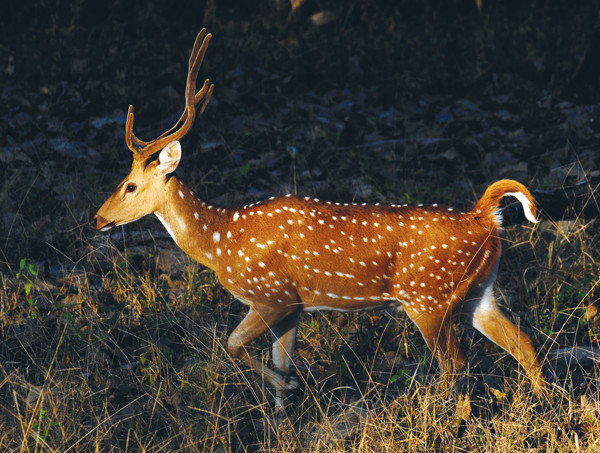
India is home to some hardy mammals, according to a new study in Proceedings of the National Academy of Sciences. Researchers reported that 20 of …
August 8, 2014
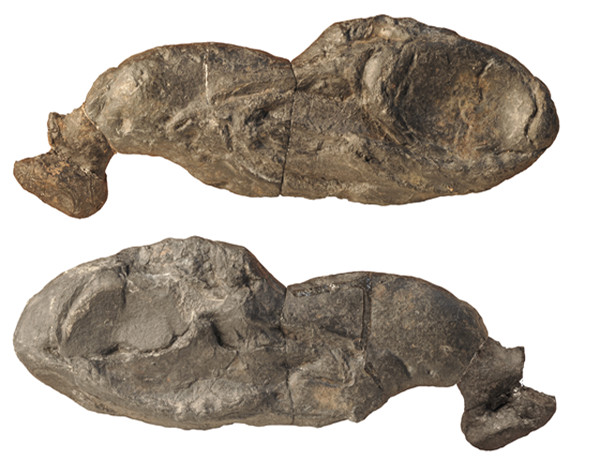
High rates of a congenital defect in woolly mammoths may offer evidence that inbreeding and environmental stress contributed to the animals’ …
August 8, 2014
Fossils of a known age have been found for the first time in rocks in Brazil that, although long-studied, had previously eluded scientists’ …
August 8, 2014
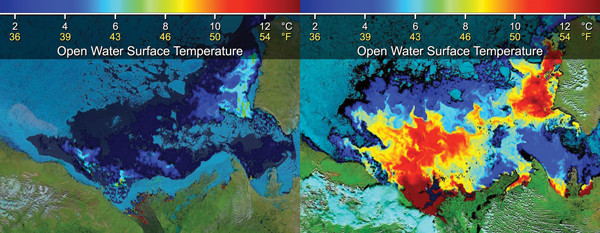
In September 2012, the area of the Arctic Ocean covered by sea ice was the smallest on record since satellite monitoring began in 1979. Several …
August 8, 2014
A nearly 40-year study of Rocky Mountain wildflower phenology has found that almost two-thirds of species have changed their blooming patterns in …
August 8, 2014
In July 2012, the Havre volcano in the remote southwestern Pacific erupted, creating a raft of pumice that covered more than 400 square …
August 8, 2014
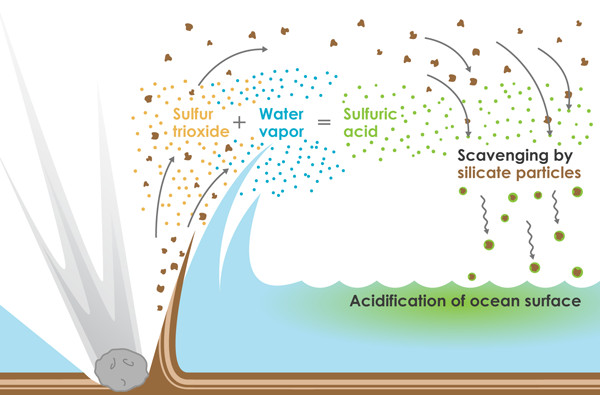
Within days after the massive Chicxulub impact that ended the Cretaceous Period 65.5 million years ago, a deluge of acid rain may have turned …
August 7, 2014
Californians are bracing for when the San Andreas Fault unleashes the next “big one,” but a new study looking at the paleoseismic history of the …
August 7, 2014
The earliest recorded case of coccidioidomycosis was documented in Argentina in 1892, when a soldier was diagnosed with what was first thought to …
August 7, 2014
Geoscientists should take precautions against contracting Valley Fever — a sometimes-fatal infection with no known cure and no vaccine that is …
August 7, 2014
The upper northern slopes of Mauna Loa are a painter’s palette of red, brown and black lava rocks. A cluster of scientific buildings composing …