September 3, 2014
Ice (Re) Cap: October 2014
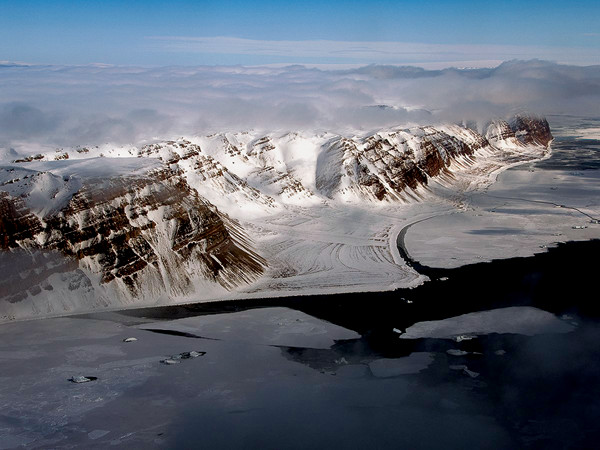
From Antarctica to the Arctic; polar caps, permafrost and glaciers to ocean-rafted sea ice; and burly bears to cold-loving microbes, fascinating …
The EARTH archive
Independent reporting on the science of our planet, in publication date order.
2686 articles · Page 78 of 112
September 3, 2014
From Antarctica to the Arctic; polar caps, permafrost and glaciers to ocean-rafted sea ice; and burly bears to cold-loving microbes, fascinating …
September 3, 2014
Four decades after the passage of the Clean Air and Clean Water Acts, the acid rain that plagued the Northeast is still diminishing. The amount …
September 3, 2014
Saturn is famous for its rings, but the sixth planet from the sun also has dozens of moons — 62 at last count, 53 of which have names — and now, …
September 3, 2014
Saturn’s peculiar polar “hexagon” has proven perplexing for scientists studying the atmospheric phenomenon since Voyager 1 and 2 first observed …
September 3, 2014
Clouds play a starring role in creating and controlling climate, but cloud physics are notoriously difficult to model, leaving wide gaps in …
September 3, 2014
In 1964, a magnitude-9.2 earthquake ruptured two segments of the Alaskan megathrust fault along more than 900 kilometers from Prince William …
September 3, 2014
The Hawaiian Islands that jut above the waves are merely the tops of a string of towering volcanoes known as the Hawaiian-Emperor seamount chain. …
September 2, 2014
Magma and salt are not often paired on the menu of geology. But, occasionally, the two do mix — with surprising results. Researchers explored …
September 2, 2014
Between April 20, 2010, when BP’s Macondo oil well blew out, and July 15, when the well was finally capped, more than 4 million barrels of oil …
September 2, 2014
There is widespread agreement among scientists based on fossil and geochemical evidence that modern humans evolved in Africa between 200,000 and …
September 2, 2014
Pockmarked plankton shells and dead coral are becoming the hallmark images of ocean acidification. But this isn’t the first time seawater has …
September 2, 2014
Less fog means trouble for Central Valley fruits and nuts Researchers have found that the number of foggy winter days in California’s …
September 2, 2014
Save the handful of Vikings who settled an ice-free stretch of Greenland’s southwest coast during the Medieval Warm Period a millennia ago, few …
September 2, 2014
The so-called Brady soil — a dark horizon up to a meter thick that underlies much of Kansas and Nebraska — is widespread but often unseen. The …
September 2, 2014
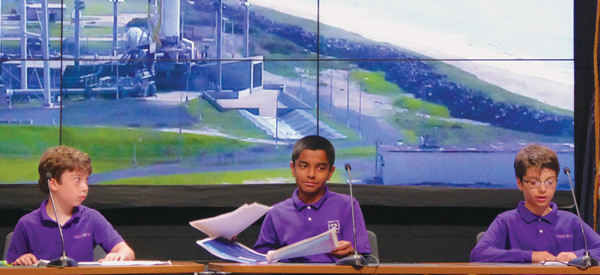
As Orb-2, the latest mission to resupply the International Space Station (ISS), lifted off on July 13, no one at NASA’s Mid-Atlantic Regional …
September 2, 2014
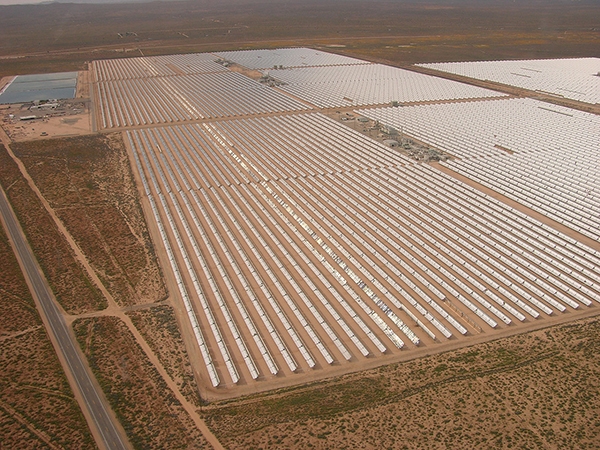
Studying the landscape-scale impact of energy development, especially renewable energies, requires working at the interface where policy, …
September 2, 2014
On Oct. 10, 1913, U.S. President Woodrow Wilson pressed a button in his Washington, D.C., office. At that moment, more than 6,400 kilometers …
September 2, 2014
Every summer, millions of people descend on beaches, many intent on building sand sculptures — some even with the hopes of winning fame or …
September 2, 2014
Asteroid impacts, supervolcano eruptions, global pandemics, nuclear war and cyberterrorism are a few examples of scenarios that could cripple or …
September 2, 2014
U.S. Oil & Petroleum Imports (million of barrels per day) Oil and petroleum imports data are preliminary numbers taken from the American …
September 2, 2014
Arnold O. Tanner, a mineral commodity specialist for the U.S. Geological Survey, compiled the following information on vermiculite, which is used …
September 2, 2014
Both Phoenix and Tucson are good arrival points for exploring southeastern Arizona, but it’s best to base yourself in Tucson to visit the …
September 2, 2014
Thanks to its dry climate and soaring peaks, the Tucson region offers some of the best night-sky viewing in the world. Perched high in the …
August 29, 2014
After more than 30 years as a professor and researcher at Caltech, earthquake geologist Kerry Sieh (pronounced “sea”) surprised his colleagues …