December 3, 2012
The long road to understanding our star
The earliest written records of sunspots date back to 165 B.C. in China, but human understanding of the sun didn’t begin making leaps forward …
The EARTH archive
Independent reporting on the science of our planet, in publication date order.
2686 articles · Page 92 of 112
December 3, 2012
The earliest written records of sunspots date back to 165 B.C. in China, but human understanding of the sun didn’t begin making leaps forward …
December 3, 2012
Sometime in the next few months — summer or fall of 2013, according to NASA’s Marshall Space Flight Center — the sun will reach the solar …
December 3, 2012
Too early to tell if findings are evidence of biological activity, scientists say SAN FRANCISCO: The Curiosity rover has detected evidence of …
November 7, 2012
CHARLOTTE, N.C. — EARTH’s Tim Oleson is in Charlotte, N.C., this week for the Geological Society of America’s (GSA) annual conference. He is …
November 7, 2012
This story was written in September and published in our December "Highlights of 2012" issue, which came out in November. Update below. In …
November 7, 2012
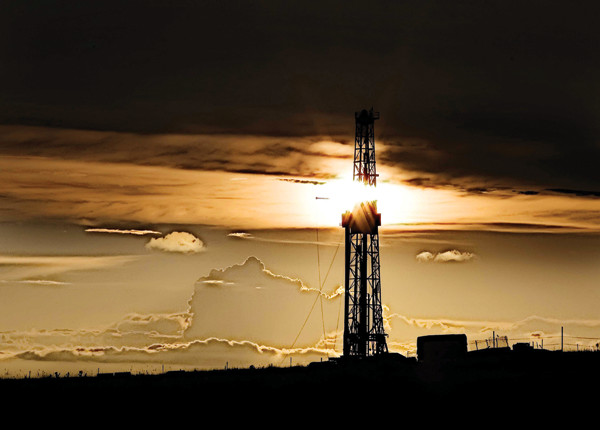
Natural gas’s bright future in the United States In the last year or more, you’ve probably heard quite a bit about “fracking” — hydraulic …
November 7, 2012
Dotted with snow dunes and nunatak mountain ranges, Antarctica’s glacial landscapes give the continent an otherworldly feel — but the scenery …
November 7, 2012
Over the past several years, the concept of resilience has increasingly captured public attention. Even fitness clubs are advertising resilience …
November 5, 2012
CHARLOTTE, N.C. — EARTH’s Tim Oleson is in Charlotte this week for the Geological Society of America’s (GSA) annual conference. He’ll be blogging …
October 26, 2012
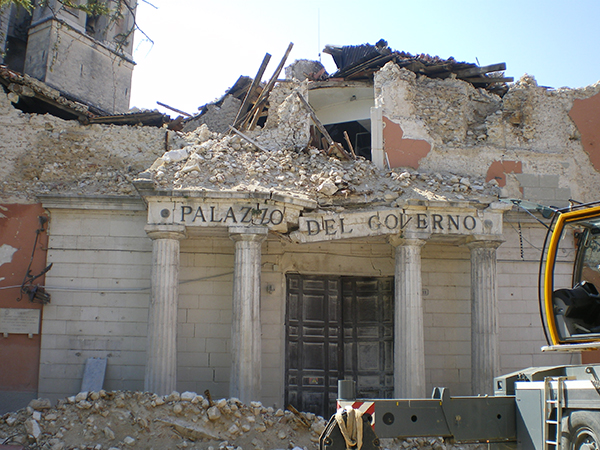
Earlier this week, an Italian judge summarily convicted seven participants in a meeting of the Italian Serious Risks Commission who evaluated the …
October 22, 2012
Today, six seismologists and one government official were convicted of manslaughter and sentenced to six years in prison. The seismologists and …
October 16, 2012
A hot Earth-sized planet circles Alpha Centauri, the sun's nearest stellar neighbor, a team of astronomers led by Xavier Dumusque of the …
October 16, 2012
Restive stakeholders crowded the auditorium at the U.S. Securities and Exchange Commission (SEC) on Aug. 22. They were anxiously awaiting the …
October 16, 2012
USArray has offered an unprecedented opportunity for earth scientists to explain to the public how we conduct experiments and test hypotheses, …
October 16, 2012
USArray has offered an unprecedented opportunity for earth scientists to explain to the public how we conduct experiments and test hypotheses, …
October 16, 2012
Illuminating what lies beneath our feet Big science often requires big tools. Particle physicists use huge particle accelerators. Astronomers …
October 16, 2012
The U.S. Geological Survey’s website states it in no uncertain terms: “There is no such thing as ’earthquake weather.'” Not too surprising, …
October 14, 2012
Until recently, the consensus in the scientific community was that the moon was bone-dry. Scientists thought that the massive impact responsible …
September 27, 2012
As the Arctic warms and sea ice melts, scientists suspect that system feedback cycles may further speed up the warming process. Now, a new study …
September 27, 2012
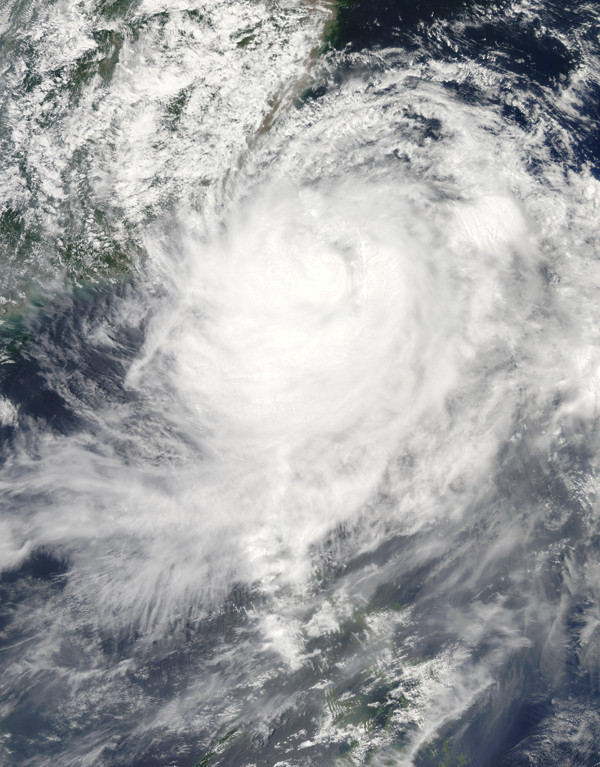
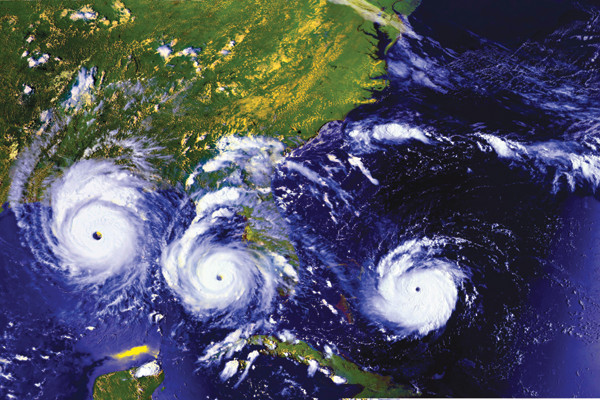
Natural hazards — earthquakes, tropical cyclones and thunderstorms, for example — occur with considerable frequency around the world. …
September 21, 2012
Like many of my colleagues, I have found myself in awe of the drastically changing energy landscape around me. Both technologically and …
August 24, 2012
“Looks like we’ve got us a Dragon by the tail.” So said astronaut Don Pettit upon the successful capture of the SpaceX Dragon capsule by the …
August 24, 2012
Antarctic ice sheets can be unforgiving field sites for scientists looking for fossils, as the ice grinds and pulverizes signs of previous life. …
August 17, 2012
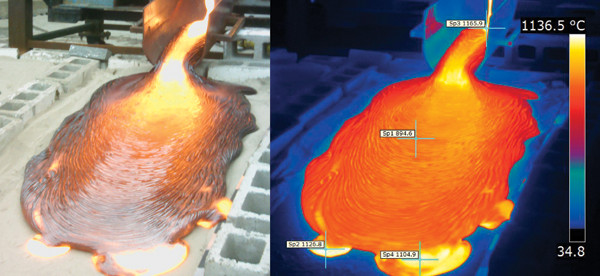
Pouring Lava Melting a batch of the ancient basalt takes about four hours, but we hold the lava above its melting point for much longer to ensure …