February 13, 2019
Hard-knock hominid skeletons tell harsh tales
The Pleistocene was a hard time for hominids. Homo fossils from this period, when humans evolved and expanded from Africa and across Eurasia, are …
The EARTH archive
Explore the archive by subject.
77 articles · Page 1 of 4
February 13, 2019
The Pleistocene was a hard time for hominids. Homo fossils from this period, when humans evolved and expanded from Africa and across Eurasia, are …
February 4, 2019
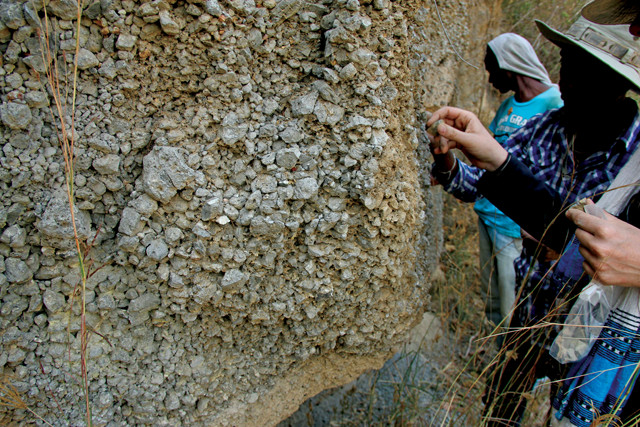
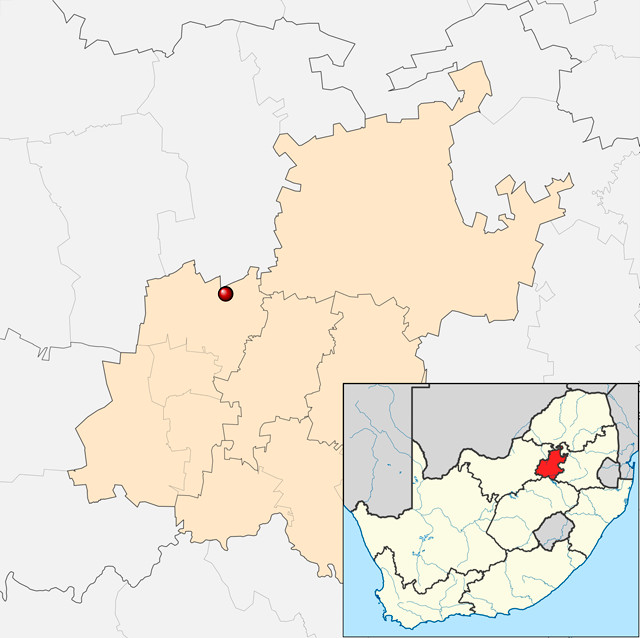
Robyn Pickering was taught as an undergraduate about a collection of limestone caves in northern South Africa known collectively as the Cradle of …
November 29, 2018
Neanderthals disappeared from Europe roughly 40,000 years ago, and scientists are still trying to figure out why. Did disease, climate change or …
July 3, 2018
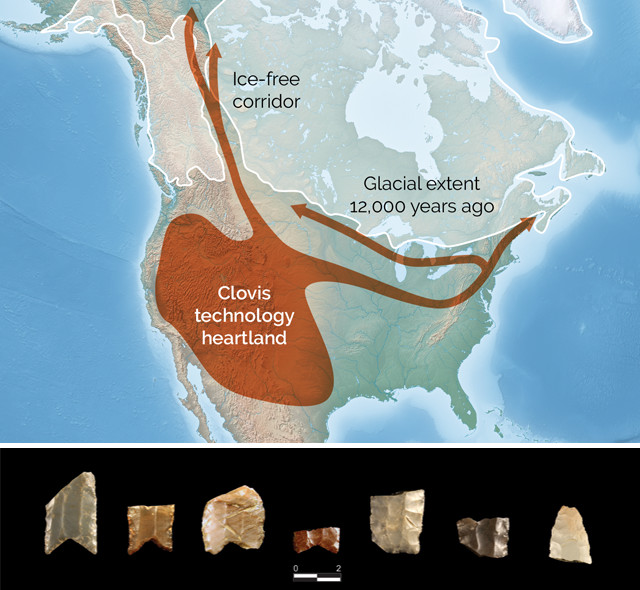
During the last ice age, long before people first entered North America, much of the Canadian and American Rockies were buried under massive ice …
June 5, 2018
About 300,000 years ago, East Africa was a hotbed of human evolution and innovation. Sweeping ecological changes contributed to the emergence of …
June 5, 2018
Today, the vast and arid Sahara Desert seems an unlikely place to find early signs of seed gathering and plant cultivation in Africa, but new …
May 1, 2018
The recent discovery of a jawbone belonging to Homo sapiens, and associated stone tools, in Israel may push back the timing of the earliest human …
May 1, 2018
In 1903, a skeleton was found in a limestone cave in Cheddar Gorge, near Somerset, England. Radiocarbon dating in the 1970s revealed the remains …
February 23, 2018
Genetics studies have dated the largest migrations of early Homo sapiens out of Africa to between 70,000 and 55,000 years ago, although smaller …
January 5, 2018
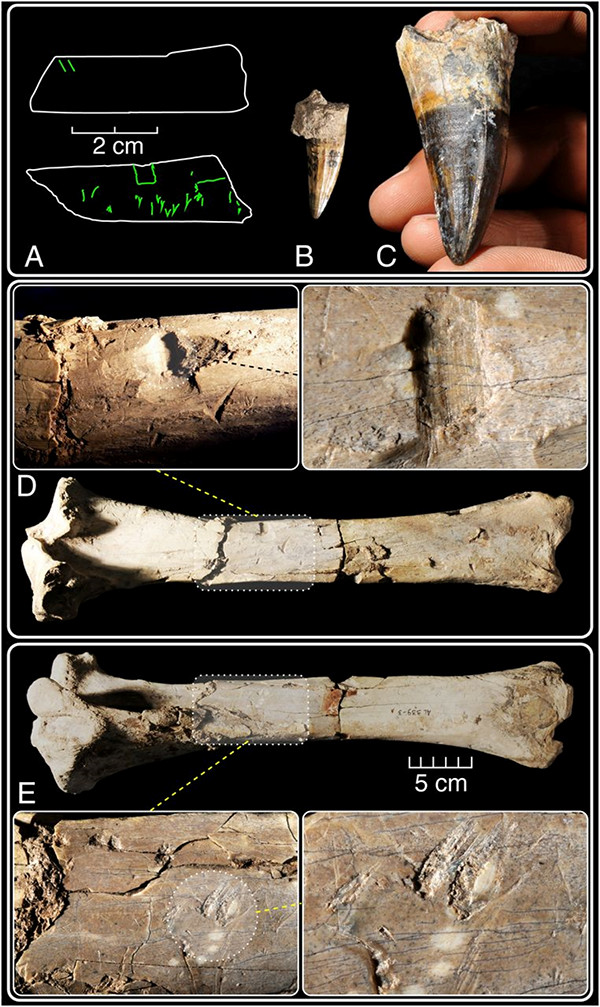
An ongoing debate regarding the origin of scrape marks on ancient animal bones has taken a new turn. The marks were first thought to have been …
December 14, 2017
Modern humans began journeying out of Africa by at least 75,000 years ago, eventually expanding across the planet. Evidence of these early human …
December 11, 2017
A curious set of 5.7-million-year-old bipedal footprints found in western Crete — far from the cradle of humanity in Africa and dating to the …
June 19, 2017
The transition to bipedal walking in our ancestors changed the hominin skeleton in many ways. New research looking at how upright walking …
April 6, 2017
Lucy, the 3.2-million-year-old human ancestor discovered in Ethiopia in 1974, is one of the most complete early hominin skeletons ever found. …
April 6, 2017
By the time I was 12, I had identified the greatest writer in the world. His name was Edgar Rice Burroughs and he wrote adventure stories about …
March 29, 2017
Ancient teeth have long been a source of information about ancient diets, mainly through analyses of isotopic compositions and wear patterns. In …
February 8, 2017
About 200,000 years ago, modern humans evolved in East Africa, including in what’s now Ethiopia. They — like earlier hominins who had preceded …
December 20, 2016
A trail of fossil, archaeological and genetic clues suggests that modern humans, who first evolved in East Africa about 200,000 years ago, may …
August 17, 2016
In 2013, cave explorers discovered a trove of human-like fossils in the Rising Star Cave in South Africa. Since then, more than 1,500 fossils …
August 17, 2016
Before genetics came along and revealed just how closely modern humans and chimpanzees are related, humans were classified in their own family, …
August 16, 2016
As the sole surviving species of the genus Homo, we Homo sapiens are one of the most taxonomically lonely species living on Earth today. But dig …
August 15, 2016
Since 2004, when scientists first announced the discovery of fossil remains of a new species of hominin from Indonesia — dubbed Homo floresiensis …
July 20, 2016
During the Upper Paleolithic, modern humans and Neanderthals coexisted until about 40,000 years ago, when Neanderthals went extinct for unknown …
July 14, 2016
In the time that Homo sapiens and Neanderthals were coexisting — and interbreeding — there was at least one more human species on the landscape, …