February 13, 2019
Hard-knock hominid skeletons tell harsh tales
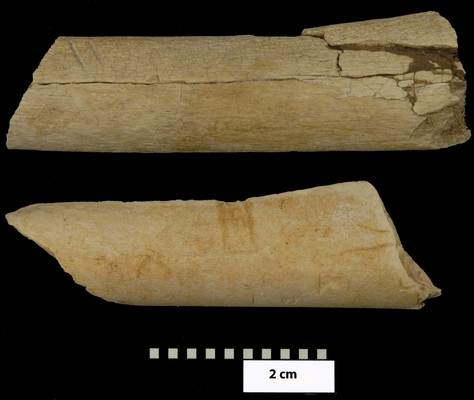
The Pleistocene was a hard time for hominids. Homo fossils from this period, when humans evolved and expanded from Africa and across Eurasia, are …
The EARTH archive
Explore the archive by subject.
28 articles · Page 1 of 2
February 13, 2019
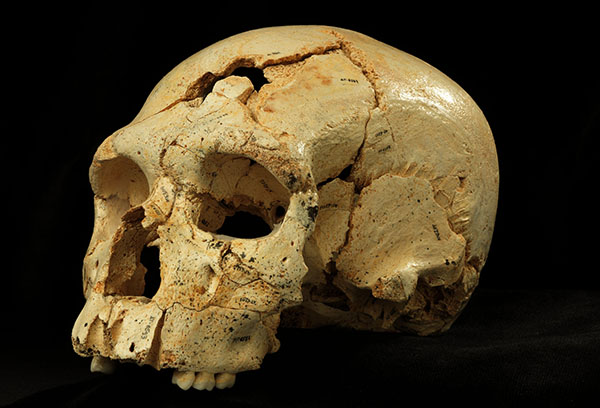
The Pleistocene was a hard time for hominids. Homo fossils from this period, when humans evolved and expanded from Africa and across Eurasia, are …
February 13, 2019
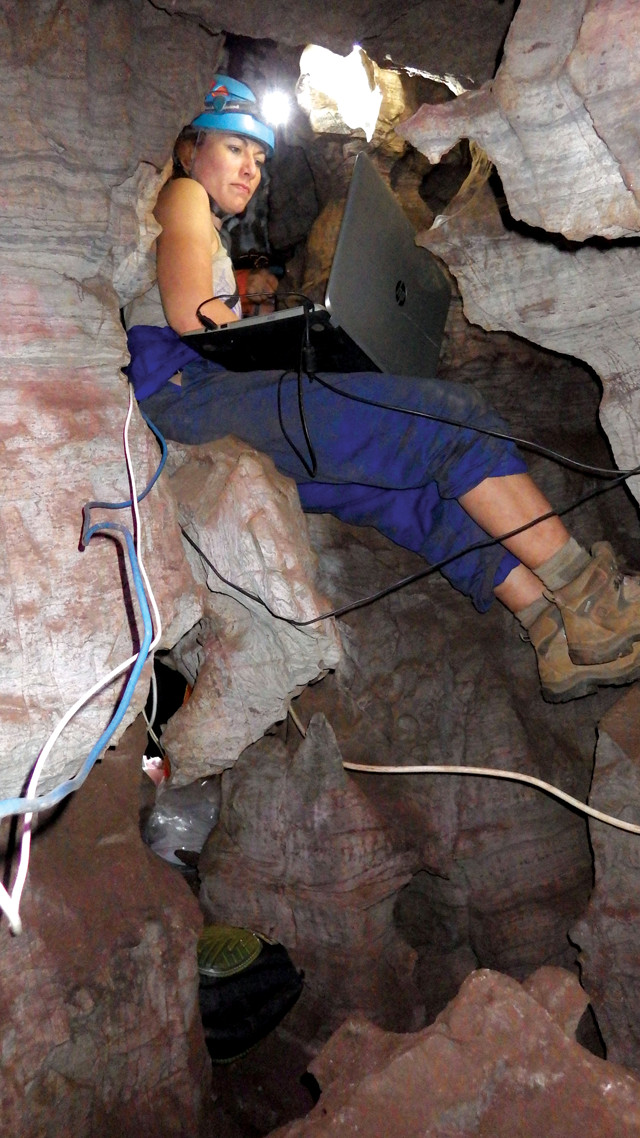
In 2013, Lindsay Hunter found herself at a personal and professional crossroads. She had gone through a divorce, left the paleoanthropology …
April 6, 2017
Lucy, the 3.2-million-year-old human ancestor discovered in Ethiopia in 1974, is one of the most complete early hominin skeletons ever found. …
March 29, 2017
Ancient teeth have long been a source of information about ancient diets, mainly through analyses of isotopic compositions and wear patterns. In …
December 27, 2016
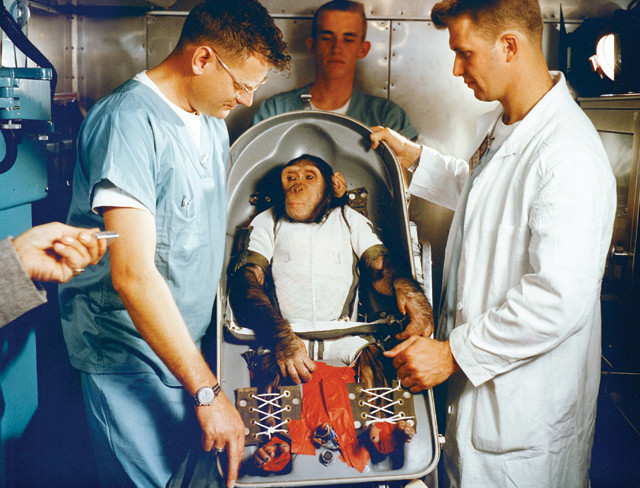
Early on the morning of Jan. 31, 1961, a chimpanzee named Ham, outfitted in a diaper, waterproof pants and a space suit, was sealed into a …
August 17, 2016
Before genetics came along and revealed just how closely modern humans and chimpanzees are related, humans were classified in their own family, …
August 16, 2016
As the sole surviving species of the genus Homo, we Homo sapiens are one of the most taxonomically lonely species living on Earth today. But dig …
June 8, 2016
Scientists first discovered fossils of Homo floresiensis — a species of extinct 1-meter-tall hominins nicknamed “hobbits” — in Liang Bua cave on …
May 19, 2016
The island of Sulawesi is one link in a chain of islands between mainland Asia and Australia, and was likely an important stepping stone in human …
April 18, 2016
In the 1980s, a collection of bones from very small hominids was excavated from a cave in southwestern China, alongside a number of bones from a …
January 8, 2016
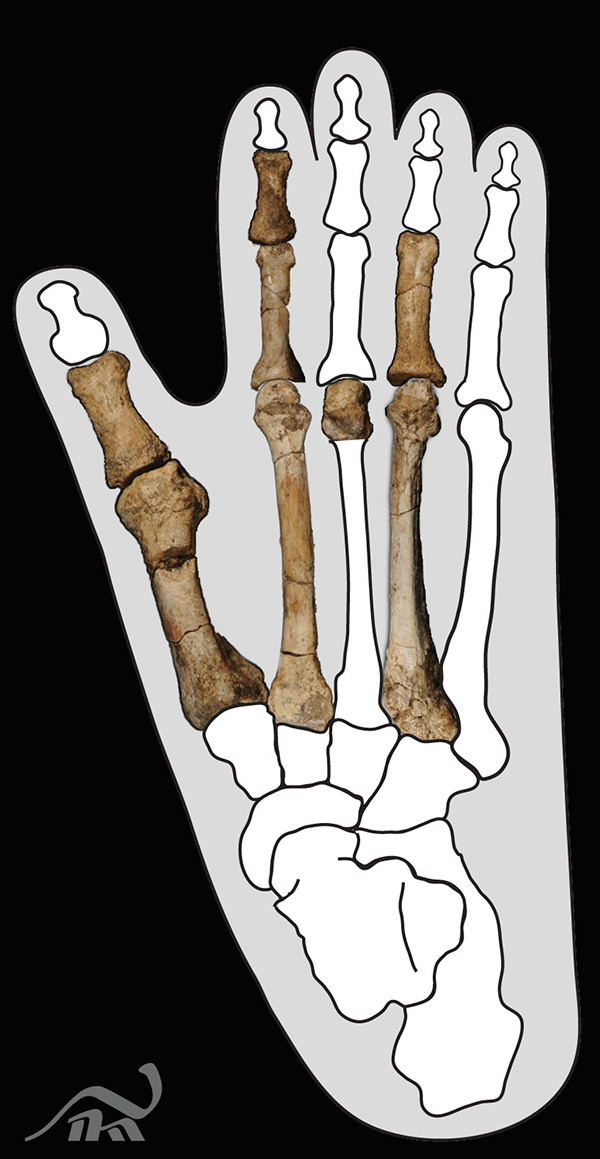
After dozens of human-like fossils were discovered in a cave in South Africa last summer, they were declared distinct enough to be classified as …
June 19, 2014
A trove of thousands of hominin fossils unearthed from a prolific cave in northern Spain is proving a boon for paleoanthropologists studying …
October 17, 2013
Hailed as a find for the ages, a rare skull of a 1.8-million-year-old human relative could provide answers to longstanding questions about the …
March 29, 2012
When Lucy and other Australopithecines were walking around Ethiopia 3.4 million years ago, they may have encountered another hominin species that …
January 20, 2012
What is it, exactly, that distinguishes us from other species? The definition of humankind has perplexed scientists, philosophers and theorists …
January 5, 2012
Modern humans and Neanderthals lived side by side on the Eurasian landscape for tens of thousands of years — but it turns out they weren’t alone, …
January 5, 2012
Ardipithecus ramidus was a hominid that lived in Ethiopia’s Afar region 4.4 million years ago. After spending more than a decade studying the …
January 5, 2012
The debate over when our ancestors first used stone tools is not over just yet. In August, researchers had reported finding scratch marks on two …
January 5, 2012
Last October, scientists formally introduced the world to Ardi the Ardipithecus, the well-preserved skeleton of a 4.4-million-year-old hominin …
January 5, 2012
How and when did modern humans leave Africa and colonize the rest of the world? Many archaeologists would probably tell you that about 60,000 …
January 5, 2012
Did “Clan of the Cave Bear” get it right after all? Probably not, but at least one aspect of the ice age saga is true: Modern humans interbred …
January 5, 2012
Last month, the Smithsonian’s National Museum of Natural History in Washington, D.C., unveiled its new (permanent) human evolution exhibit: the …
January 5, 2012
Mapping out how one species of early hominin branches to another has always been complicated by the rarity of complete specimens and lack of …
January 5, 2012
Though counterintuitive, scientists have turned their attention away from the feet and to the wrist and forearm to better understand how humans …