December 21, 2018
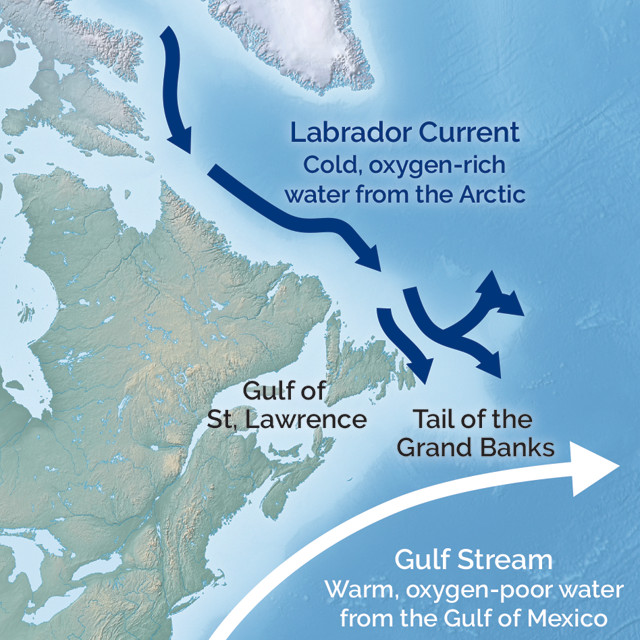
Ocean circulation change suffocating Gulf of St. Lawrence
Estuaries are among the most nutrient-rich and biologically productive areas of the ocean, and the Gulf of St. Lawrence, where freshwater from …
The EARTH archive
Explore the archive by subject.
10 articles · Page 1 of 1
December 21, 2018
Estuaries are among the most nutrient-rich and biologically productive areas of the ocean, and the Gulf of St. Lawrence, where freshwater from …
March 8, 2018
Seventy-one percent of our planet is covered by ocean, and these basins contain 97 percent of Earth’s near-surface water. The ocean lies at the …
September 14, 2017
The Arctic Ocean hasn’t always been as salty as other oceans. In the Eocene, between 56 million and 34 million years ago, the water surrounding …
April 19, 2017
From Antarctica to the Arctic; from polar caps, permafrost and glaciers to ocean-rafted sea ice; and from burly bears to cold-loving microbes, …
January 13, 2017
In May 2015, a seizure-wracked sea lion hauled itself ashore on a beach in southern Washington. Testing confirmed it was suffering from domoic …
January 8, 2016
Atmospheric, not oceanic, circulation may be the main driver of climate variations over the North Atlantic Ocean, potentially complicating future …
July 17, 2015
During the Late Pleistocene, changes in North Atlantic Ocean circulation triggered abrupt changes in global climate: In some locations in the …
June 8, 2015
Levels of the atmospheric pollutant hydrogen chloride have increased substantially in the lower stratosphere over the Northern Hemisphere since …
July 18, 2014
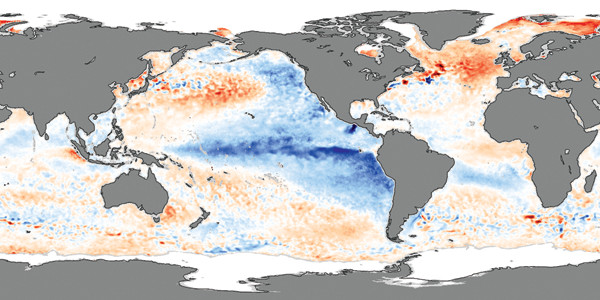
Many La Niña events last just one season, but historical records reveal that nearly half linger for two years or more, a phenomenon scientists …
January 5, 2012
Out in the middle of the northern Pacific Ocean, a giant floating mess of plastic debris is drifting and bobbing among the waves. Scientists call …